

Mold has no chill. One day your bathroom looks fine, the next there’s a fuzzy science experiment growing on the ceiling tiles. Household mold isn’t just gross, it can mess with your air, your walls, and your weekend plans.
Now, some folks reach straight for bleach to kill mold. Others? They swear by vinegar. But can that humble bottle of household white vinegar actually kill mold or is it just another overhyped household cleaner?
If you’ve ever wondered whether vinegar can really remove mold, tackle mold spores hiding on porous surfaces, or if you’ll need a mold remediation company on speed dial, keep reading.
Things are about to get (mildly) acidic.
Can Vinegar Really Kill Mold?
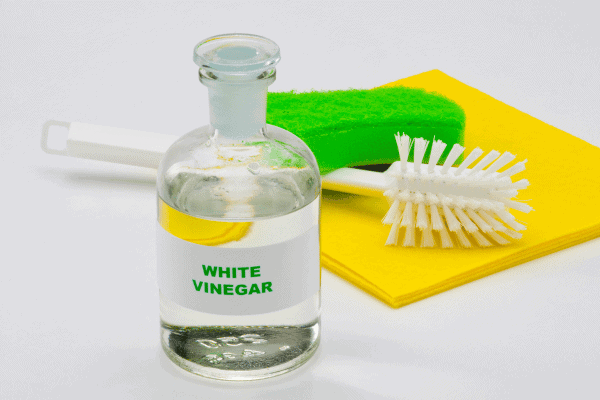
Yes, vinegar can kill mold, but it has its limits. Studies show that white vinegar can eliminate up to 82% of mold species, thanks to its acetic acid content. The trick lies in using undiluted white vinegar, which typically contains about 5% acetic acid.
This mild acid breaks down the structure of mold cells, making vinegar an effective cleaning agent for smaller infestations.
Vinegar works best on hard surfaces that don’t soak in moisture. Think bathroom tiles, glass shower doors, and kitchen countertops. If you’ve got surface mold on stainless steel or stone countertops, grabbing a spray bottle filled with vinegar is a good first move.
Let the vinegar sit for at least an hour before wiping the moldy surface clean and letting it air dry.
The story changes when you’re dealing with porous surfaces. Mold growing inside drywall, ceiling tiles, or moldy wood is a different beast.
Vinegar can’t fully penetrate porous materials, which allows mold spores to hide deep beneath the surface. In these cases, you might wipe off the visible mold only to find it creeping back within days.
That’s why vinegar, while helpful for light mold cleanup, isn’t your all-in-one solution. If the mold covers a large area, keeps coming back, or you’re unsure about the type of mold (like black mold), it’s time to skip the DIY and talk to a professional mold removal company.
Managing mold isn’t just about appearances, it’s about health and long-term protection.
For mild, isolated spots, vinegar can be a safe and natural remedy. But when you’re staring at a mold problem that seems to grow overnight, it’s best not to gamble with a pantry item.
How to Use Vinegar to Kill Mold (Step-by-Step Guide)
Step 1: Use Distilled White Vinegar (Undiluted)
Ready to go full scientist on your mold problem? Before you grab the spray bottle and declare war, you’ll want to suit up. Mold cleanup isn’t a job for bare hands and wishful thinking. Since mold exposure can lead to allergic reactions and breathing issues, make sure you’re wearing rubber gloves, protective eye gear, and an N-95 mask.
Mold spores don’t care if you’re cleaning the guest bathroom or the back of your fridge, they’ll float right into your lungs if you’re not careful.
Now, let’s talk vinegar. You don’t need anything fancy. That bottle of distilled white vinegar from your pantry works perfectly, as long as it has at least 5% acetic acid. This mild acid gives vinegar its antifungal and antibacterial properties, which helps it effectively kill mold on hard surfaces.
Pour it straight into a spray bottle. No need to mix vinegar with water, diluting it only weakens its power. You want undiluted vinegar to kill mold, especially on non porous surfaces like glass, tiles, or metal fixtures.
Before spraying down the moldy area, crack open the windows and get some airflow going. Mold thrives in damp areas, and ventilation helps reduce the risk of lingering spores hanging around while you work.
Once you’re prepped, you’re ready to get scrubbing, but don’t rush. Let that vinegar sit for a while. We’ll get to that next.
Step 2: Spray Generously on Moldy Surface

This isn’t the time for a light mist, mold doesn’t back down that easily. After you’ve geared up and prepped your vinegar mixture, it’s time to drench the moldy surface like you mean it.
Mold growing in corners, along grout lines, or around window sills loves to hide where your cloth can’t reach. That’s why your spray bottle needs to reach every crack and edge.
Aim for full coverage. Whether you’re dealing with surface mold on bathroom tiles or a small patch on your stone countertops, saturating the area allows the vinegar to seep in and do its job. Undiluted white vinegar is a mild acid, but it still packs enough punch to disrupt the chemical structure of many molds.
Spraying generously helps the vinegar penetrate porous surfaces as much as it can. While it won’t reach deep into materials like drywall, soaking the top layer can still help remove mold that’s just starting to take hold.
Let it sit. Let it stew.
Step 3: Let It Sit for At Least 60 Minutes
Here’s where most people mess up, they spray and wipe like they’re racing the clock. But if you want the vinegar to actually kill mold, you’ve got to let it do its thing. This isn’t a sprint. It’s a slow chemical takedown.
Once your moldy area is soaked, step away and let the vinegar sit for at least an hour. This contact time is what allows the acetic acid to break down the mold’s structure and start targeting those stubborn mold spores. It’s not just about cleaning mold, it’s about making sure it doesn’t come right back.
While you wait, keep the area ventilated. Mold thrives in damp, enclosed spaces, so airflow helps prevent mold growth from returning. You’re not just treating a spot, you’re managing the whole mold situation.
No peeking, no wiping. Patience here equals results. When the clock’s up, that moldy surface will be ready for the next move.
Step 4: Scrub with a Brush or Sponge

After the vinegar has had its hour-long showdown with the mold, it’s time for some elbow grease. No, you’re not done yet. Spraying vinegar alone won’t magically remove mold, now you’ve got to scrub like you mean it.
Grab a stiff brush if you’re working on tiles or grout. Mold loves clinging to textured areas, and a good brush helps break up what the vinegar started to loosen. For smoother surfaces like stone countertops or glass, a sponge will do the trick just fine.
Start from the top if you’re cleaning vertical areas, like bathroom walls or shower doors. This way, you catch any drips and make sure every inch gets attention. Dip your sponge into clean warm water often and rinse it out as you go. That helps avoid spreading mold spores around instead of wiping them away.
Once you’ve finished, dry the surface completely. Mold thrives in damp areas, and leftover moisture invites it right back. A dry, clean space is your first step in keeping that mold from turning into a regular guest.
Step 5: Repeat or Combine with Baking Soda if Needed

Some mold just doesn’t take the hint. If your first round of vinegar didn’t fully kill mold on stubborn areas like grout lines or moldy wood, don’t toss the sponge yet. You’ve got backup, baking soda.
This pantry duo is surprisingly powerful. Mix baking soda with a little warm water to form a paste, then scrub it into the moldy surface. Its mild abrasive texture helps lift mold that’s clinging on for dear life. Plus, baking soda has antibacterial properties that add an extra layer of protection against future mold growth.
Still not satisfied? Spray vinegar again after cleaning. It acts as a barrier to prevent mold from returning. In fact, studies show that letting vinegar sit on mold for an hour improves its effectiveness by 30% compared to rinsing it off too soon.
Even many molds that resist household cleaners respond better when you combine vinegar and baking soda. Think of it as a tag-team effort, acetic acid weakens the mold, and baking soda helps finish the job.
When Is Vinegar Not Enough?
So, you’ve sprayed, scrubbed, and even let the vinegar sit like a pro. But the moldy surface is still looking suspicious, or worse, spreading. That’s your sign: vinegar isn’t always the hero.
While vinegar can effectively kill mold on tiles or countertops, it’s not built for the big leagues. Some mold problems are like that stubborn guest who just won’t leave no matter how strong your cleaner smells.
If you spot any of these red flags, it’s time to call a mold remediation company:
- Black mold creeping through drywall
- Moldy wood that feels soft or smells earthy
- Mold growing inside vents or HVAC systems
- Recurring mold in damp areas, even after cleanup
- Signs of leaks fueling mold growth behind walls or under floors
Black mold (yes, that black mold) is especially tough. Its spores settle deep into porous surfaces, far beyond the reach of undiluted white vinegar. And if the mold covers more than a patch or two, the vinegar simply can’t penetrate porous surfaces deeply enough to kill mold at the root.
Vinegar is great for quick fixes on hard surfaces. But when the mold problem spreads, grows silently, or keeps returning, managing mold means getting serious. Call in a professional mold removal company before it spreads into something your spray bottle can’t handle.
Reach Out to Atlanta Maids for Your Cleaning Needs
Vinegar’s great in a salad, and sure, it can kill mold on your shower tiles, but when the problem keeps creeping back, it’s time to bring in the big brooms. Mold cleanup isn’t just about what you can see. It’s about what’s hiding in the cracks, corners, and deep within those moisture-prone spaces you’d rather not think about.
That’s where we come in.
At Atlanta Maids, we don’t just wipe surfaces, we fight grime, tame moldy chaos, and bring back the sparkle your home deserves. Whether it’s a bathroom that’s seen better days or a kitchen that could use a detox, our team’s got the tools (and the vinegar) to handle it.
So skip the scrubbing marathon. Call (404) 905-5141 or book your cleaning online at atlantamaids.com, because life’s too short to battle mold with a spray bottle. Let us handle the mess so you can breathe easy.
FAQs
Does Vinegar Kill Mold?
Yes, vinegar can kill mold, especially on hard surfaces like tiles, glass, or countertops. It works well for managing small patches of surface mold thanks to its mild acid content. However, when mold thrives on porous surfaces such as drywall or fabric, vinegar might not penetrate deeply enough to fully kill mold at the root. For best results, always use undiluted vinegar and allow it to sit for at least an hour to help break down the mold’s structure.
Does White Vinegar Kill Mold?
Distilled white vinegar is one of the most effective natural household cleaners for mold removal. Its acetic acid concentration (around 5%) gives it strong antifungal and antibacterial properties. When sprayed directly onto the moldy area and left to sit, it can kill mold on non porous surfaces. It’s affordable, accessible, and safe to use, just be sure to wear protective gear during mold cleanup to avoid unnecessary exposure.
Does Vinegar Kill Black Mold?
White vinegar can help remove mold if you catch black mold early and it’s growing on hard surfaces like ceramic or stone. But once it spreads on porous surfaces like moldy wood or drywall, vinegar just won’t cut it. Black mold, or Stachybotrys chartarum, tends to grow deep into organic materials, and vinegar’s ability to kill mold spores in such cases is limited. If black mold covers a large area, it’s best to call a mold remediation company.
How Long Does It Take Vinegar to Kill Mold?
The key to using vinegar to kill mold is patience. Letting the vinegar sit on a moldy surface for at least 60 minutes increases its effectiveness significantly. One study even found that contact time can improve results by up to 30%. The longer you let undiluted vinegar sit, the more likely it is to disrupt mold spores and break down their structure, especially in bathrooms or damp areas where mold growth is common.
Does Apple Cider Vinegar Kill Mold?
Apple cider vinegar has some antifungal properties, but it’s not as strong as distilled white vinegar when it comes to cleaning mold. Its lower acidity means it’s less effective at breaking down mold cells. While it might manage light mold growth on hard surfaces, it’s not recommended for serious mold problems. If you’re dealing with recurring mold or porous materials, use vinegar with a higher acetic acid level, or call in professionals for proper mold remediation.
Does Vinegar Kill Pink Mold?
Yes, vinegar can kill pink mold, particularly the kind you often find in showers, sinks, and around bathtubs. Pink mold isn’t a true mold but a type of bacteria that thrives in damp areas. Using undiluted vinegar and scrubbing with a brush or sponge can help remove mold and stop it from returning. Follow up with regular cleaning and drying to prevent mold growth from reappearing in those tricky corners.
Does Cleaning Vinegar Kill Mold?
Cleaning vinegar, with about 6% acetic acid, has a stronger chemical structure than regular household vinegar. That makes it even more effective at killing mold on hard surfaces. It’s especially useful in kitchens and bathrooms where moldy surfaces are common. Just like with household white vinegar, wear protective gear and allow the vinegar to sit on the surface mold for at least an hour before wiping it away.
Does Vinegar Kill Mold Spores?
Vinegar can disrupt mold spores and help prevent mold growth, but it won’t eliminate spores buried deep in porous materials. While it works well as an antifungal and antibacterial cleaner on visible mold, it’s not guaranteed to kill every spore in areas like moldy wood or ceiling tiles. For deeply embedded spores or hidden mold problems, a professional mold removal company is your safest option.
Does Distilled White Vinegar Kill Mold?
Absolutely. Distilled white vinegar is the go-to option for natural mold cleanup. With around 5% acetic acid, it’s strong enough to break down mold cells on non porous surfaces. Spray undiluted white vinegar directly onto the moldy area, let it sit for at least an hour, and then scrub. It’s an effective cleaning agent for common household molds, especially in bathrooms, kitchens, and laundry areas where mold exposure tends to happen most.