

Your toilet is one of the busiest fixtures in your home, yet it often slips to the bottom of the cleaning list. Over time, the bowl can collect mineral deposits, rust stains, and stubborn rings that a quick scrub with a toilet brush will not erase.
What makes it more concerning is that toilets can host bacteria such as E. coli, which thrives in human waste and lingers on surfaces. A recent study found that closing the lid before flushing doesn’t fully prevent contamination, as microscopic particles can still spread across the bathroom.
With so much happening below and above the water line, it’s no wonder toilet bowl stains become tough to handle. The good news? There are proven ways to clean them effectively.
Stay with us as we walk through practical methods that bring back a spotless porcelain surface.
Before You Begin: Safety, Tools, and Preparation
Before you start cleaning toilet stains, it’s important to set yourself up with the right safety measures, tools, and environment. Taking a few minutes to prepare will not only make the process easier but also keep you safe and comfortable while working.
What You’ll Need
- Protective gear: Wear rubber gloves to keep your hands safe from grime and harsh products. If you are using bleach or other strong cleaners, add goggles and a mask to protect your eyes and lungs.
- Tools: Have a durable toilet brush ready for everyday scrubbing, and keep a pumice stone nearby for stubborn stains on the porcelain surface. An old toothbrush works well under the water line or around tight spots. Use a spray bottle or bucket to apply cleaning solutions evenly, and microfiber cloths to wipe away residue.
- Ventilation: Make sure your bathroom has good airflow before you begin. Open a window if you can, or turn on the exhaust fan to keep fresh air moving while you clean. This step helps reduce odors and keeps the environment safer.
Common Mistakes to Avoid
Even the best intentions can backfire when cleaning toilet stains. What seems like a quick fix can actually damage the porcelain surface, spread more grime, or leave you with a bigger mess than you started with. To save yourself the extra work, here are the mistakes you’ll want to sidestep:
- Mixing bleach with other cleaners
Combining bleach with vinegar or products containing lemon juice creates harmful fumes. Keep bleach separate and make sure the bathroom has good ventilation when using it. - Using a pumice stone, dry
Scrubbing a porcelain surface with a dry pumice stone can scratch it badly. Always soak the stone in water first so it stays soft while tackling stubborn stains near the water line. - Relying on in-tank tablets
These tablets may keep the bowl looking clean for a short time, but they often corrode the inner parts of the toilet. A consistent routine with a toilet brush and a trusted toilet bowl cleaner is far more effective. - Storing the toilet brush wet
A damp brush left in its holder quickly breeds germs, mildew, and residue. Rinse it well, let it dry, and store it separately to keep future cleaning sessions more sanitary.
Avoiding these common mistakes keeps your bathroom cleaner, your toilet in better shape, and your efforts from going to waste.
Types of Toilet Stains
1. Hard Water Stains
Few things are more frustrating than scrubbing and scrubbing, only to see those same chalky streaks staring back at you. Hard water stains are the usual suspects here, and they’re a common headache in many homes.
These stains form when calcium and magnesium deposits from hard water cling to the porcelain surface. Over time, the minerals react with the bowl and create buildup that doesn’t come off with a quick scrub. Because the deposits often settle in hard-to-reach areas, especially around the water line, they can be stubborn stains that linger for months if not treated properly.
Hard water stains usually show up as white, gray, or brownish rings and streaks across the toilet bowl. They’re not only unsightly but also a reminder of the mineral deposits hiding in your plumbing system.
To rid the bowl of this buildup, you’ll need more than just a toilet brush and elbow grease. The right cleaning solution is key.
2. Rust and Iron Stains
Just when you think your toilet bowl is finally free of stains, those orange streaks show up again. Rust and iron stains are sneaky, creeping in when water is rich in iron and reacting with the porcelain surface.
They usually appear as orange or reddish streaks around the rim or at the base of the bowl, where water tends to sit the longest. The more the iron in the water interacts with oxygen, the darker and more stubborn the stains become.
Regular brushing with a toilet brush won’t solve the problem, and in many cases, you’ll need a targeted toilet bowl cleaner designed specifically for removing rust stains.
Left untreated, iron buildup doesn’t just discolor the porcelain surface. It makes the entire bathroom look neglected. Knowing how to tackle these stains early keeps the toilet bowl from turning into a canvas of rusty rings and streaks.
3. Organic Waste and Mineral Rings
A toilet that isn’t flushed regularly can quickly develop stains that look unpleasant and smell even worse. The yellow or green rings you sometimes see are caused by urine sediment or biofilm building up along the bowl.
Because they are organic in nature, they settle in and create discoloration that feels harder to remove than ordinary grime.
Not all of these stains behave the same way. Marks inside the toilet bowl are often easier to treat because the water keeps them from setting firmly. Urine stains that collect around the base react with the surface material, and the acidity makes them tougher to clean without using stronger solutions.
These toilet rings are common in guest bathrooms or places that sit unused for long stretches. Once they take hold, simple brushing rarely gets rid of them. Acting quickly with the right toilet bowl cleaner helps prevent the stains from spreading and keeps the bathroom looking fresh.
4. Mold and Mildew
If hard water stains are stubborn and rust is messy, mold is the uninvited guest that refuses to leave. It shows up as black or green specks tucked under the rim or along the water line, turning a clean bathroom into one that looks neglected overnight.
Mold and mildew thrive because the toilet bowl gives them everything they want. Moisture, mineral deposits from hard water, and dark corners where light never reaches all create the perfect environment.
The underside of the bowl and the tank are favorite hiding places. If ignored, they not only stain the porcelain surface but also produce an odor that lingers after every flush.
The smartest step before grabbing a toilet brush is identifying what you’re facing. Mold doesn’t react the same way as rust stains or calcium buildup, and using the wrong solution only wastes time. Picking the right toilet bowl cleaner at the start gives you better results and keeps the problem from spreading.
Natural Cleaning Methods (Eco-Friendly & Safe)
1. White Vinegar and Baking Soda
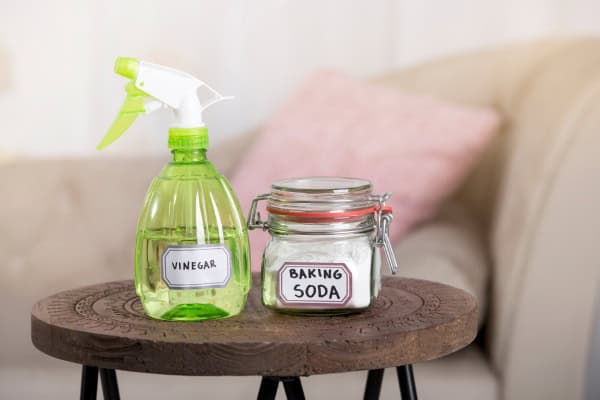
Who knew your pantry could double as your cleaning aisle? White vinegar and baking soda might look ordinary, but together they pack enough power to tackle toilet stains without relying on harsh chemicals.
They fizz, scrub, and dissolve mineral deposits while keeping the porcelain surface safe.
- Step 1: Pour one to two cups of white vinegar around the toilet bowl, making sure it coats the stained areas.
- Step 2: Let the vinegar sit for thirty to sixty minutes so it can break down mineral deposits and grime.
- Step 3: Sprinkle half a cup of baking soda onto the stains and scrub with a toilet brush to loosen the buildup.
The vinegar’s mild acidity breaks down hard water rings and mineral deposits, while the baking soda adds just enough abrasiveness to scrub away residue. This makes the method especially useful for toilet rings and light buildup that regular brushing cannot remove.
2. Lemon Juice and Borax Paste
A dull, dingy toilet bowl does not always need harsh bleach to look clean again. Citrus can do more than freshen your kitchen. The natural acids in lemon juice cut through mineral deposits and lighten stubborn stains.
When paired with borax powder, the mixture becomes strong enough to target mold, mildew, and toilet rings while leaving a fresher scent behind.
- Step 1: Squeeze lemon juice directly over the stained areas of the bowl so the surface is well covered.
- Step 2: Dust the wet areas with borax powder and allow the paste to sit for at least one hour. For heavy buildup, leaving it overnight produces better results.
- Step 3: Scrub the stained areas with a toilet brush or sponge until the residue lifts, then flush to rinse clean.
It works best on early-stage limescale or toilet bowls that look dull rather than deeply stained. Borax is considered a more eco-friendly option than bleach, but it still requires care, so wear gloves while handling it.
3. Hydrogen Peroxide Spray
Hydrogen peroxide, the same bottle you keep in the medicine cabinet, doubles as a safe disinfectant for cleaning toilet stains. It brightens the porcelain surface, kills mildew, and leaves the bowl fresher without relying on bleach.
- Step 1: Pour half a cup of hydrogen peroxide into a spray bottle. For a pleasant scent, add a few drops of your favorite essential oil. The oil won’t mix completely, so give the bottle a quick shake before each use. Always use the standard 3 percent solution sold in drugstores.
- Step 2: Flush the toilet first so the water line wets the bowl. Spray directly onto light organic stains or mildew and let the solution sit for fifteen to twenty minutes.
- Step 3: Scrub the stained areas with a toilet brush and finish with a flush to rinse away residue.
Hydrogen peroxide is most effective on mildew and light toilet rings, giving you a disinfected bowl without the smell of bleach. For day-to-day upkeep, though, it’s a simple way to keep the bowl looking fresh and sanitized.
4. Cola Treatment

It may sound more like a party trick than a cleaning tip, but cola has enough acidity to make a difference in toilet stains. The phosphoric acid in a can of Coca-Cola can loosen light toilet rings, mineral deposits, and surface grime, leaving the bowl looking fresher than before.
- Step 1: Pour a full can of regular cola into the toilet bowl, making sure the liquid covers the water line and stained areas.
- Step 2: Allow it to sit overnight so the acid has time to soften buildup and break down residue.
- Step 3: Scrub with a toilet brush and finish with a flush to rinse the porcelain surface clean.
Cola treatment works best on minor discoloration and as a quick fix between deep cleanings. It will not eliminate heavy limescale or stubborn stains, but it can give your toilet bowl a brighter look with very little effort.
Heavy-Duty Commercial Cleaners (When Natural Isn’t Enough)
1. Clorox Toilet Bowl Cleaner with Bleach

Natural cleaners can handle light buildup, but stubborn stains often need something stronger. Clorox Toilet Bowl Cleaner with Bleach is a reliable option when the bowl requires deep cleaning and full disinfection. It not only removes toilet rings and residue but also sanitizes the porcelain surface.
Begin by flushing the toilet so the water level lowers and more of the stained areas are visible. Squeeze about six ounces of the cleaner under and around the rim, making sure the liquid coats the bowl evenly.
Scrub the surface with a stiff toilet brush, paying close attention to the water line and spots that tend to collect buildup. Leave the cleaner in place for around ten minutes to disinfect and break down grime, then flush again to rinse the surface.
Clorox has strong cleaning power, but it also has a strong chemical odor. Always keep the bathroom ventilated during use and prevent children or pets from accessing the toilet until it is rinsed clean.
2. Harpic Power Plus 10x

Some toilet stains laugh in the face of mild cleaners. When rust stains, toilet rings, or layers of hard water deposits refuse to budge, Harpic Power Plus 10x brings in the muscle.
Its hydrochloric acid formula doesn’t just loosen buildup. It chemically dissolves limescale, mineral deposits, and grime that cling tightly to the porcelain surface.
Unlike regular toilet bowl cleaners, this solution penetrates deep into stained areas, breaking them down and lifting them from the ceramic surface. It is particularly effective on rust and stubborn hard water stains that make a toilet bowl look permanently discolored.
Beyond stain removal, the disinfectant properties in Harpic Power Plus kill germs and bacteria, leaving the bowl hygienic as well as clean.
Because this product is acid-based, safety matters. Always wear gloves and eye protection, and make sure the bathroom is well ventilated while cleaning. For best results, follow the instructions on the label carefully and keep the product out of reach of children and pets.
3. Scrubbing Bubbles Power Stain Destroyer
Open the cap, squeeze it under the rim, and the show begins. Scrubbing Bubbles Power Stain Destroyer does not simply sit on the porcelain surface. It shifts color as it works, turning from green to blue while dissolving toilet rings, rust stains, and limescale.
The effect is both practical and satisfying, giving you visible proof that the cleaner is breaking down mineral deposits and mildew along the water line.
The bottle comes with an angled neck that makes it easier to reach spots a toilet brush often misses, especially under the rim. Once applied, the formula clings to the bowl for fifteen minutes, softening buildup and loosening residue. A quick scrub finishes the process, and a flush rinses everything clean.
It is safe for septic systems and strong enough for everyday cleaning, which makes it a good choice for anyone who wants stain removal without the heavy chemical odor.
4. Lysol Power Toilet Cleaner

A family bathroom that sees constant traffic rarely looks filthy, but small signs usually give it away. A faint ring at the water line, a bit of residue under the rim, and an odor that lingers after flushing are clear signals the toilet needs attention. This is the kind of situation where Lysol Power Toilet Cleaner works well.
The thick gel clings to the porcelain bowl instead of sliding straight into the water. That extra contact time helps loosen buildup while also deodorizing the surface. Used weekly, it keeps toilet rings from forming and leaves the bathroom smelling fresher.
While it is effective for maintenance, Lysol is not designed for severe problems such as heavy rust or hard water stains from well water. Harpic is better suited for those situations.
Lysol’s real strength is prevention, helping you stay ahead of stains so the toilet never reaches the point where harsher cleaners are required.
Do This to Avoid Recurring Toilet Stains
Cleaning a toilet once is satisfying, but keeping it spotless week after week takes a little strategy. Stains return quickly if the bowl is neglected, and ignoring the small details often leads to bigger problems like hard water rings, rust stains, or mildew buildup.
With a few smart habits, you can reduce the time spent scrubbing and stop stains before they settle on the porcelain surface.
- Stay consistent: Clean the toilet at least once a week to prevent mineral deposits, toilet rings, and grime from setting in.
- Use the right tools: Keep a dedicated toilet brush for the bowl and replace it regularly. Cleaning under the rim is essential since that is where stains often begin.
- Don’t skip the outside: Wipe down the tank, seat, lid, and handle with a disinfectant cleaner to get rid of mildew, water stains, and germs.
- Match the cleaner to the stain: Hard water stains respond best to vinegar or specialized toilet bowl cleaners, while hydrogen peroxide or lemon juice can target mold and mildew.
- Tackle hard water at the source: If your home has constant hard water stains, consider installing a water softener system.
- Prevent buildup: Toilet bowl tablets can slow down limescale formation, but avoid bleach-based ones that corrode parts of the tank.
- Protect the surface: For an extra barrier, apply a thin coat of car wax to a clean, dry bowl. Reapply every few months to help stains rinse away more easily.
With these habits in place, the toilet bowl stays brighter, the porcelain surface lasts longer, and cleaning sessions become quicker and easier.
Clean Bowl. Clear Mind. Professional Help Awaits.
Toilet stains have a habit of coming back. They sit under the rim, circle the water line, and turn scrubbing into a never-ending chore. You could keep fighting with vinegar, baking soda, or bleach, but there is an easier way.
Atlanta Maids handles the mess from start to finish. Our cleaning crew knows how to deal with rust, limescale, and mildew that settle into the porcelain bowl. Every corner of the toilet gets attention, from the rim to the base, so the bathroom feels fresh instead of just passable.
Why waste another weekend chasing stains when someone else can do it faster and better?
Book your cleaning at AtlantaMaids.com/booking-page or call (404) 905-5141. Let Atlanta Maids take the brush out of your hands and give you back a bathroom that shines.
FAQs
What causes brown stains in the toilet bowl?
Brown stains in a toilet bowl usually form from a mix of mineral deposits and rust stains caused by hard water. When water is high in iron, it reacts with the porcelain surface and leaves behind discoloration. Over time, the residue builds around the water line and creates toilet rings that regular flushing cannot remove. Without weekly cleaning, these stains sink deeper into the porcelain, making them harder to scrub with a toilet brush.
How to get rid of brown stains in the toilet bowl?
Brown toilet bowl stains can be treated with white vinegar and baking soda or with a stronger toilet bowl cleaner if the buildup is heavy. Start by pouring vinegar around the bowl and letting it sit, then sprinkle baking soda on the stained areas. Scrub with a toilet brush until the residue lifts. For stubborn stains, borax powder or a pumice stone may be needed. Always wear gloves when cleaning to protect your hands from chemicals.
How to remove black stains in the toilet bowl?
Black stains often come from mold or mildew growing in damp areas like under the rim or along the water line. These stains thrive in bathrooms with poor airflow and high humidity. To clean them, spray hydrogen peroxide on the stained areas and let it sit for about twenty minutes before scrubbing with a brush. Lemon juice combined with borax powder is another option for removing tough stains without bleach. Regular cleaning helps stop mildew from returning.
What causes yellow stains in the toilet bowl?
Yellow stains usually appear from urine residue and hard water deposits that mix on the porcelain surface. If the toilet is not flushed regularly, urine sediment settles into the bowl and leaves behind rings or streaks. Hard water makes the problem worse by adding calcium and lime buildup. These stains often show up in guest bathrooms or toilets that sit unused for several days, and they are more difficult to clean if ignored for too long.
How do you remove yellow stains from a toilet bowl?
To remove yellow stains, flush the toilet and apply a generous amount of white vinegar around the rim and water line. Let it sit for thirty minutes, then scrub with a toilet brush to break down residue. For stubborn toilet stains, sprinkle baking soda or use a paste of lemon juice and borax powder on the stained areas. If buildup is heavy, a commercial toilet bowl cleaner can restore the porcelain surface. Regular weekly cleaning prevents the stains from returning.